The name WR Grace comes up at key points in the story of the descendants of Ines and Maria Teresa Del Pozo.
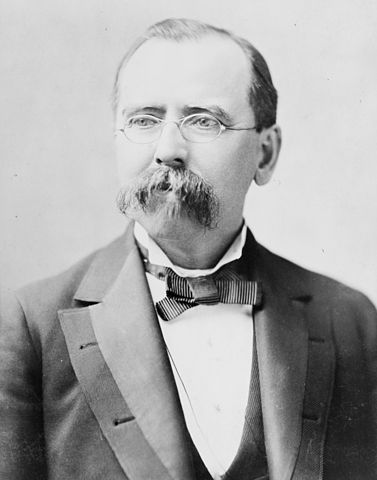
William Grace arrived in Peru in 1850 when he was 18 years old…
William Russel Grace was an Irishman who traveled to Peru from Ireland, adopted Peruvian culture and became a very successful businessman there. Though his original business interests were related to fertilizers, he later moved the headquarters of his business to New York, expanded into shipping and his company became one of the biggest names in the chemical and shipping businesses.
The chemical fertilizers used in agriculture today were not available in the 1800’s. By the early 1800’s soils in Europe and America were seriously depleted. In November 1802, Prussian geographer and explorer Alexander von Humboldt discovered huge deposits of guano (bird excrement) at Callao in Peru.
The word “guano” originates from the Andean indigenous language Quechua, which refers to any form of dung used as an agricultural fertilizer. Archaeological evidence suggests that Andean people collected guano from small islands and points off the desert coast of Peru for use as a soil amendment for well over 1,500 years –Wikipedia (“Guano”)
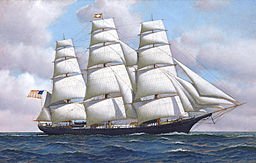
Sailing ships had to sail down the west coast of South America, around the dangerous passage at Cape horn, then back up the East Coast of South America to the anxious markets of North Ameria and Europe.
It turned out that in certain islands off the coast of Peru there were accumulations of Guano so vast that in some areas it was 200 feet deep. An unusual combination of climatic conditions and avian wildlife combined there to make this guano far superior to the guano found anywhere else. It was a very valuable and effective fertilizer and so when Von Humboldt returned to Europe and wrote about it, his writings attracted significant attention. North American farms also had the problem of depleted soils so they also were very interested in this new discovery in Peru and by the 1830’s American ships were there:
“By the 1830s, the first American ships mined guano from a group of islands off the coast of Peru called the Chincha Islands. Thanks to the large population of boobies, pelicans, and guanay cormorants, these islands were covered in guano nearly 200 feet deep.” -Smithzonian Institution
By 1850 an Irishman named William Russel Grace, who came from a prominent Irish family, traveled to Peru and became very successful there:
In 1850 he visited Callao, Peru, where he entered the shipping house of Bryce & Co. as a clerk, becoming a partner two years later. Early success came to him when he positioned one of the firm’s supply ships off the Peruvian coast, thereby permitting cargo fleets to purchase supplies without sending their workers ashore. In 1854 the firm became Bryce, Grace & Co. and within a few years controlled much of the shipping along the coasts of Peru and Chile. His health declining, Grace turned the management of the firm over to his brother and left Peru in 1865. –Encyclopedia Brittanica
“The Bryce-Grace partnership lasted until 1876, when the Graces bought out the Bryces and the firm became known as Grace Brothers & Company” -p. 234 Holett, Dave “More precious than Gold: The story of the Peruvian Guano Trade”
In Peru, the company would become informally known as “Casa Grace”. A more detailed descripton of how he became successful appeared in “Irish Migration Studies in Latin America”:
“Hundreds of ships anchored off the Chinchas each year loading this rich fertilizer that was revitalizing over-used lands in Europe and the United States, and the ships needed re-victualling and refitting for the long return voyage to the Atlantic via Cape Horn. William soon pitched in with his own ideas.
He decided to take an old hulk, stock it with provisions for sale and anchor it amidst the guano fleet. This saved the guano ships from having to make a separate voyage to Callao, the port of Lima, before returning to the Atlantic. The young entrepreneur put Bryce Brothers ahead of its competitors and William was on his way, quickly recognised for his talents and energies by the older Bryce brothers, and much appreciated by ship owners, captains, and masters in the guano fleet.
William was not only a talented young entrepreneur, but a gregarious and charming young man. He met Lillius Gilchrest, the daughter of George Gilchrest, one of the ship captains. Lillius was traveling with her father on these long voyages and after a courtship there amidst the most improbable circumstances of stinking dung consignments, William and Lillius returned to her hometown of Tennants Harbor, Maine, USA, and married on 11 September 1859. Their first child, Alice Gertrude, was born on 11 June 1860 on the storeship anchored at the Chinchas” –from page 1 of “Irish Migration studies in Latin America”
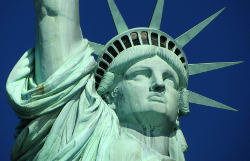 Ultimately after the headquarters of his firm was moved to New York he would become active in politics and in the 1880’s he was elected mayor of New York twice. In his second term he accepted delivery of the Statue of Liberty from France.
William Russel Grace was not the only UK man to become enormously wealthy from the guano trade in Peru. In the 1860’s William Gibbs also became “the richest non-noble man in England” from the guano trade.
There’s more about the Peruvian Guano Trade at this Smithzonian website.