Julia Martinez Serrano1 was the fifth child of Dr. Martinez through his first wife Rafaela. She was born on October 21, 1884. It was a critical time in the history of Ecuador. A decade earlier Ecuador’s narrow-minded dictator Gabriel Garcia Moreno had been cut down by machete-weilding assasins in a brutal attack. As one recent Historian -Hubert Herring- has expressed it, in the years after Garcia Moreno:
…the government of Ecuador fell apart for a while as a series of short-lived dictators took charge. The people of Ecuador didn’t really want to live in a religious theocracy…
But in 1883, a year before Julia’s birth, a new president, Jose Maria Caamaño, had come to power. He was seen as “Conservative and Catholic” and the elements in Ecuador who tended to favor a theocratic system of government set their hopes on this new president. There were elaborate ceremonies and funeral orations were read for the great departed hero Gabriel Garcia Moreno. It was in this environment, early in the presidency of Caamaño that Rafaela gave birth to Julia. Later, in late 1885, Dr. Martinez began to look about for ways to speak out and impact the ominous train of events that was unfolding in his country. Julia was just about a year old when her father hit upon the idea of publishing a small newspaper in Guayaquil to speak out about the evil forces that were gaining influence in the country. This was “El Perico” (the Parakeet). There would be no insults, no personal (ad hominem) attacks …just a few birds discussing the issues of the day among themselves. He enlisted the aid of a friend of his, a Frenchman named Pepe LaPierre, who had an uncanny talent for poetry – a powerful secret weapon that has been used to impact political events in many nations down through history. A small section was reserved for “The Nightengale”, the pseudonym under which Pepe LaPierre penned his poems.
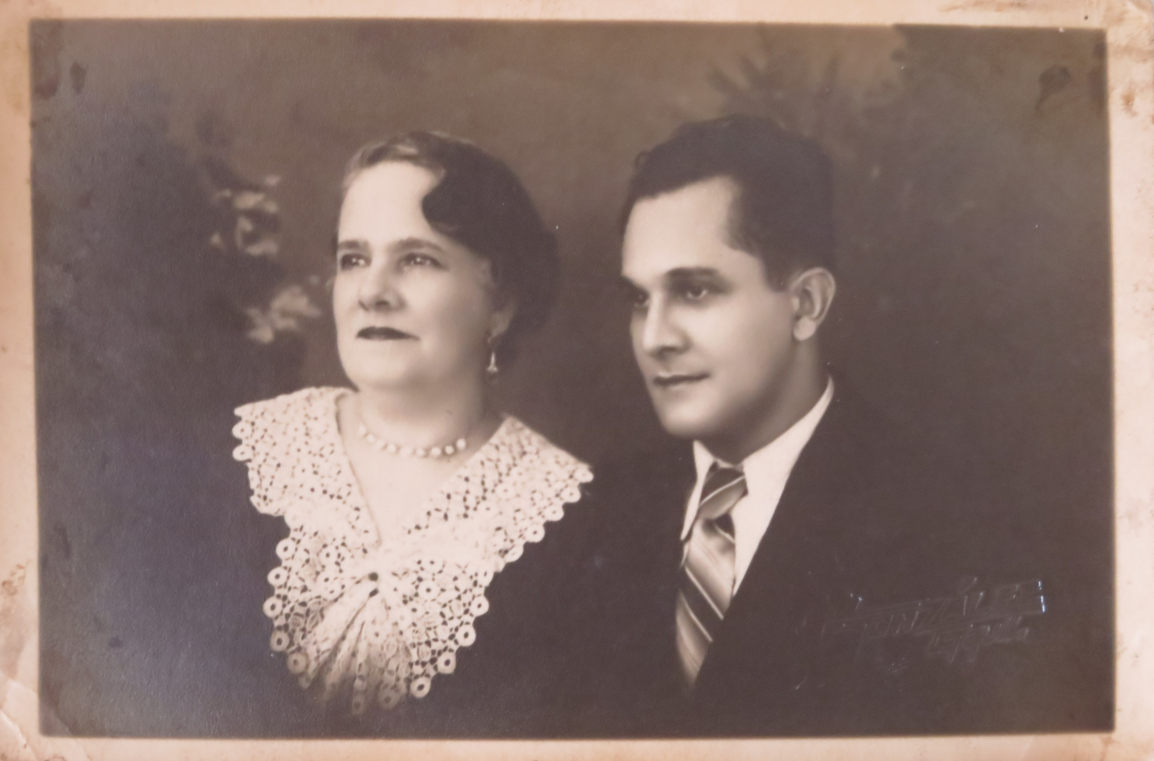
Julia Martinez Serrano with her son Carlos Maldonado Martinez
His new baby girl was still a toddler when the first issue of El Perico rolled out of the press in early November of 1885. It was an instant hit! The government authorities didn’t bother Dr. Martinez but there were many other people in Ecuador who were opposed to the dangerous path that the government was now pursuing. Some of these opponents were violent. One day a rogue group of individuals hatched a conspiracy to kidnap the president. They almost succeeded but they were thwarted. This resulted in a general crackdown against all known opponents of the regime. It was in the environment of this general crackdown that Dr. Martinez and his family were exiled to Peru.
Unfortunately, details about how the family managed this transition in exile are few and far between. We do know however that “Mason Brothers” stepped in and helped Dr. Martinez to be installed as a medical professor at a Universidad de San Marcos in Lima during his exile.
In 1888, three years after Julia’s birth, while the family was in exile, a baby was born …in Peru. His name was Miguel. But when Miguel was four years of age their mother Rafaela would die giving birth to her 9th child (1892). Then four years later their father married again and the responsibility of raising the 8yr-old Miguel and the 11yr-old Julia fell to the shoulders of a stepmother: Maria Teresa Martinez Del Pozo (Dr. Martinez’ second wife).
Stories about Miguel and Julia
Though there were three years between them, these two siblings -Miguel and Julia- had a close relationship; they were playmates. Sometimes they would engage in activities that were not so safe …like running around on the roofs of buildings and even jumping from roof to roof. Their young stepmother had her hands full. Shortly after the marriage the couple started to have children of their own. Meanwhile the children for whom she was responsible ranged in age from 4yrs of age (Maria – whose mother Rafaela had died giving birth to her) all the way up to the oldest son Julio who was college age …just a few years younger than Maria Teresa herself. Not surprisingly, the feelings of some of these children toward the new stepmother were not at all cozy. There were two separate households – one for most, but not all, of the children from the first marriage and another for the new couple and their children (including some of the children from the first marriage who could not be left to the care of their older siblings).
The following incident was recounted to the author by Julia’s granddaughter who heard it from Julia herself: Julia and her younger brother Miguel, like typical pre-teen youngsters, would sometimes get themselves into a bit of trouble doing risky activities (like running around on the roofs of buildings). Finally in one incident they were injured and just barely escaped serious injury. Exasperated, Maria Teresa decided to send the older sibling, Julia, to live at a boarding school run by nuns (connected to a convent) for a period of time. This school was “el Collegio de los Sagrados Corazones” (School of the Sacred Hearts). While there, there was an outbreak of fire in Guayaquil. It would not be an ordinary fire; it was “El Incendio Grande”, the Great fire of 1896 that burned much of the city and in which a number of souls lost their lives. Alarmed and afraid in the emergency, the nuns instructed the children that before they exited the structure they were to each take with them one or two of the images and statues and Icons that were present throughout the convent. So many of them followed the instructions. But Julia, it seems, was not inclined to servile obedience to the nuns. Instead of grabbing a statue she noticed that a sizable quantity of fresh oranges was about to be left behind to the flames. So she put them in a bag and brought the oranges with her so that as they roamed from place to place after the fire they would have something to eat. There was a period of one or more nights during which some of these children did not have a place to sleep. In the end this turned out to go over rather well with the refugees during the time of their displacement because -other than some hard cookies- no one had thought to bring the food that they would need while waiting a few days to be re-settled into new or repaired accommodations. This event was a great trauma in the family because during a period of several days the family had no news of Julia’s whereabouts or her fate and Julia had no news of the fate of her family.
There are a few relevant details in connection with this story. The Great fire of 1896 occurred on October 5, 1896. Careful checks on the date of the marriage to Maria Teresa show it to have occurred in November of 1896. So Maria Teresa would not have even been the legal stepmother of Julia at the time she was banished to the boarding school – she would have just been the fiancee of Dr. Martinez. We would have to wonder if she was given prerogatives in advance of the wedding during the time the couple was engaged.
Another important detail is that it is related the when she was a schoolgirl, other schoolchildren would sometimes call Julia Martinez “Perico Martinez” – a reference to her father’s newspaper.
Years later when Julia became an adult, she married but the marriage did not work out. She raised her son Carlos essentially by herself. When her father died suddenly in 1917 circumstances became somewhat difficult for her and in that situation her younger sister Maria Martinez Serrano – whose mother had died giving birth to her – took her in. So Julia and her son lived together with Maria and her family for many years while he was growing up.
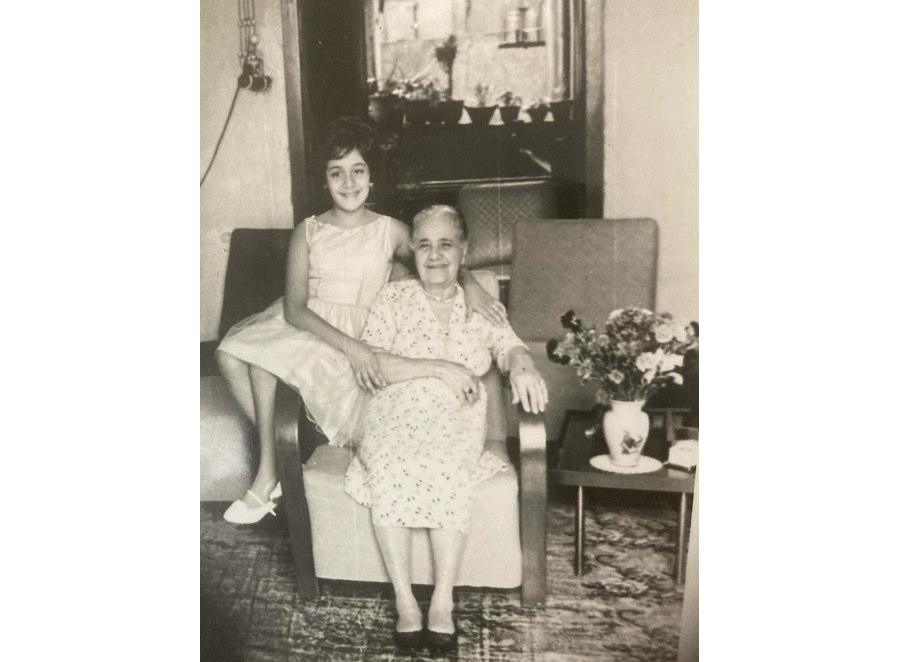 Julia Martinez Serrano and her granddaughter Maria Antonieta - transmitter of these photos and of so much valuable family information.
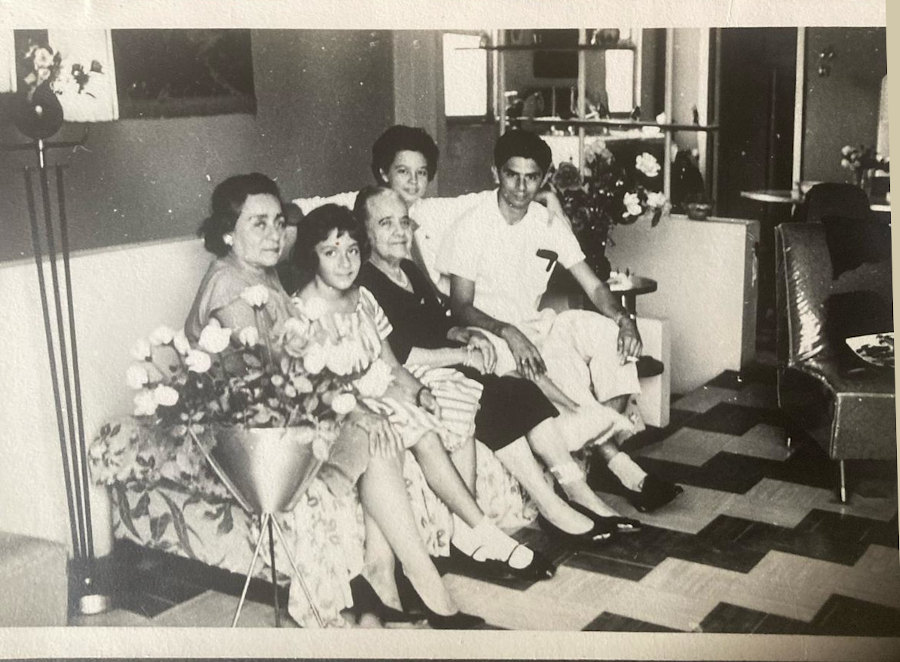
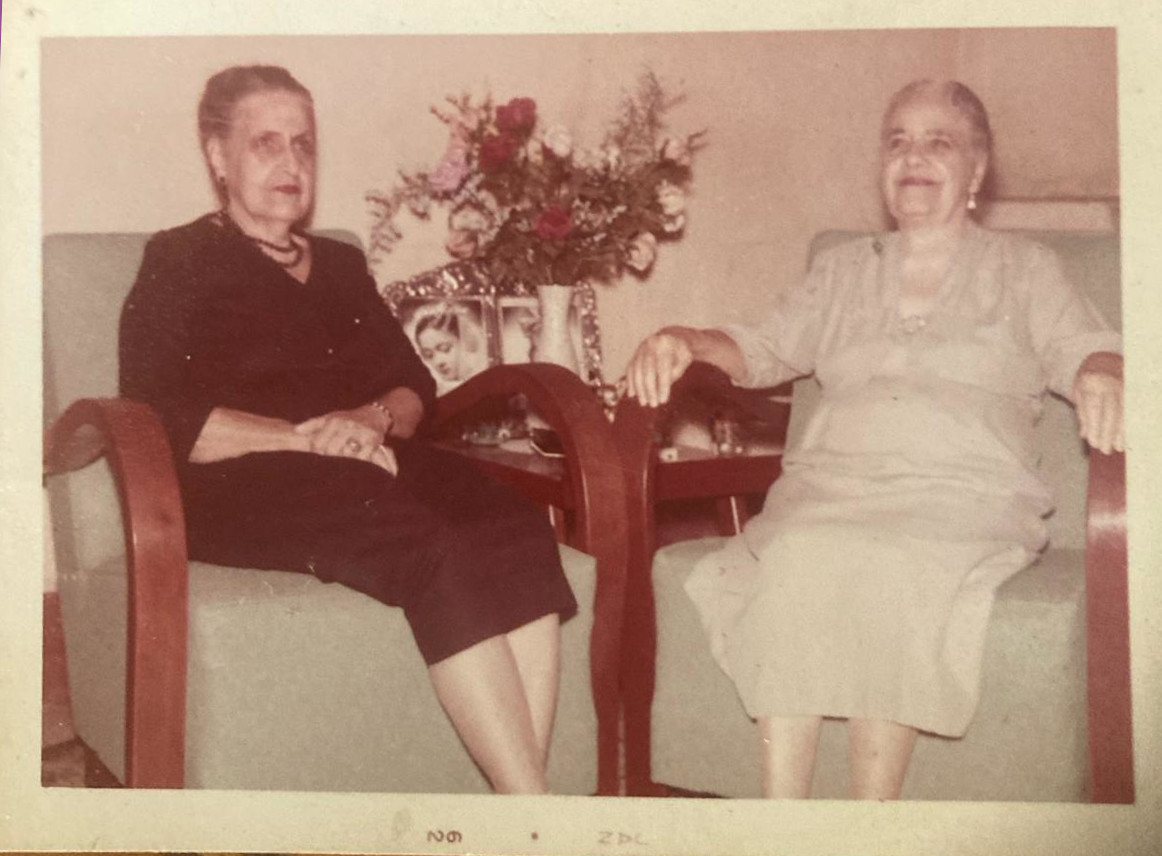
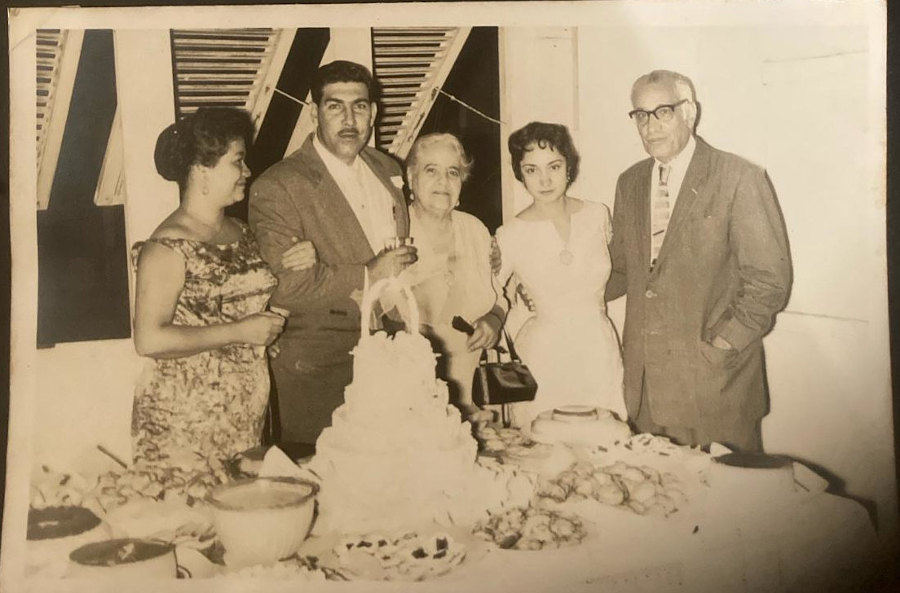
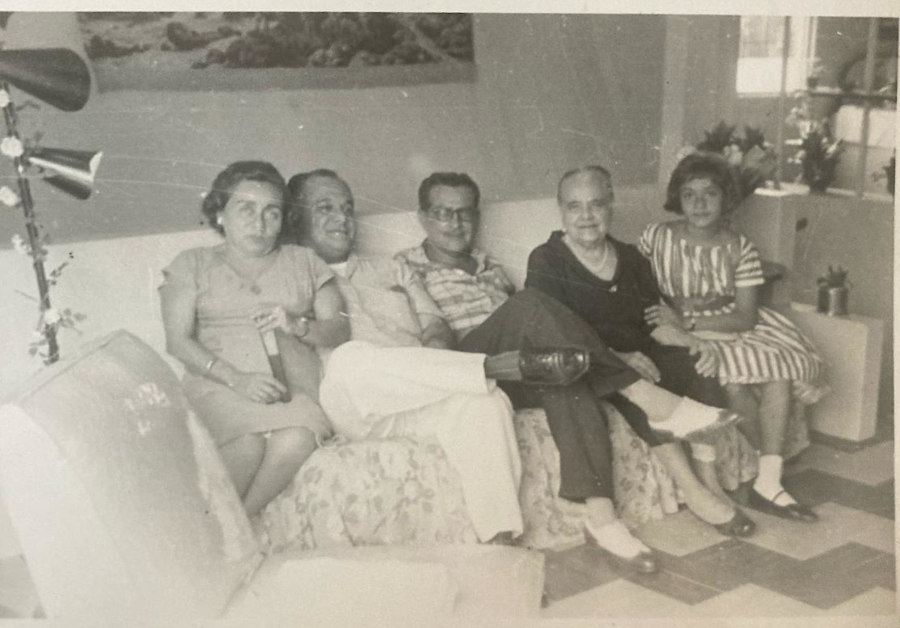
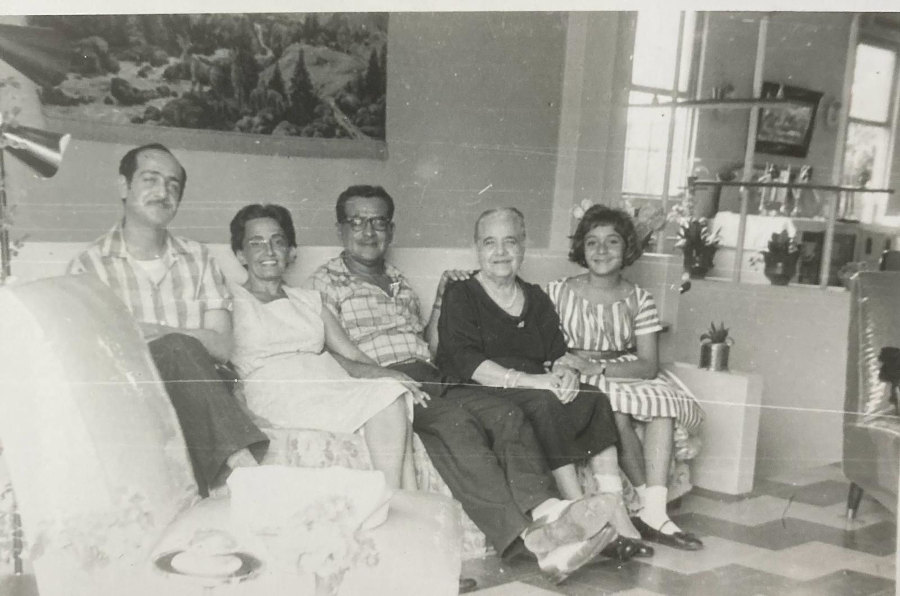
Julia died in 1964 just before her 80th birthday. She was a great source of information about the family and was very willing to share it. She lived long enough to pass a sizable amount of information to the willing and listening ears of her young granddaughter Maria Antonieta Marcillo.
- Julia’s name is pronounced like: who-lee-uh ↵