by Patrick Connolly with input from Patty Wilson
This family historical account focuses primarily on two Del Pozo sisters, Ines and Maria Teresa, as events in their lives and the lives of their husbands (some of them very turbulent events) swept them away from South America leaving their descendants culturally transplanted far away in the US. Evidence has recently come to light demonstrating that Maria Teresa Martinez Del Pozo was in close contact with her older sister Ines in the months and years leading up to her fateful decision to migrate to the US in 1917. In its own light, the story of Ines and her husband Carlos Wilson is a most interesting one.
The name WR Grace comes up in connection with this story so a brief outline of that important connection is provided here to provide some background to the reader.
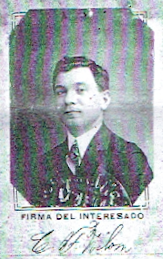
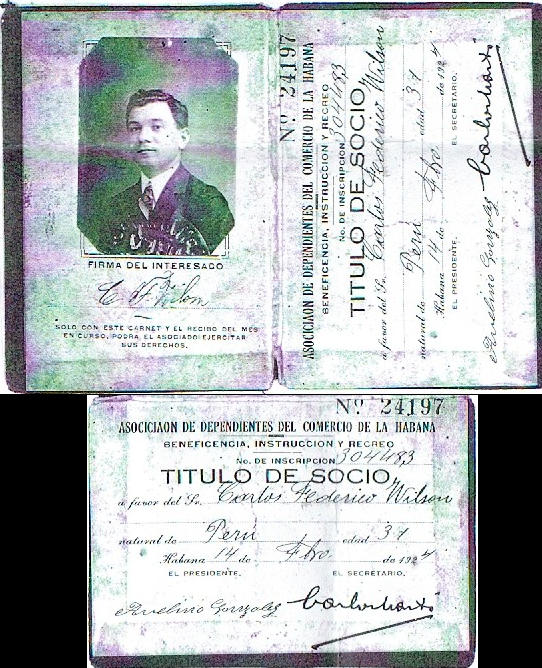
Carlos Wilson, age 31yrs. From a Cuban Government document for his partnership in 1924.
Carlos Federico Wilson Puglisevich was a Peruvian whose grandparents had migrated to Peru from England in the early 19th century. He was born in Trujillo Peru in 1892 and his mother is believed to have been a Peruvian woman. We don’t know for sure how he met Ines Del Pozo who was an Ecuadorian; there is no record of her travelling to Peru but his Resume – which is still available – shows that by 1912 he was working in a department store in Guayaquil. Recently evidence has come to light placing him in Guayaquil as early as 1909 – when he would have been 17 years of age. One way or the other, these two met and were married in 1910. Ines was a comely lady. She was the oldest of the Del Pozo siblings and the best record we have places her birth in the year 1872. This means that she married her 18-year-old groom at age 38 and gave birth to her three children when she was 40, 43, and 48 years of age respectively.
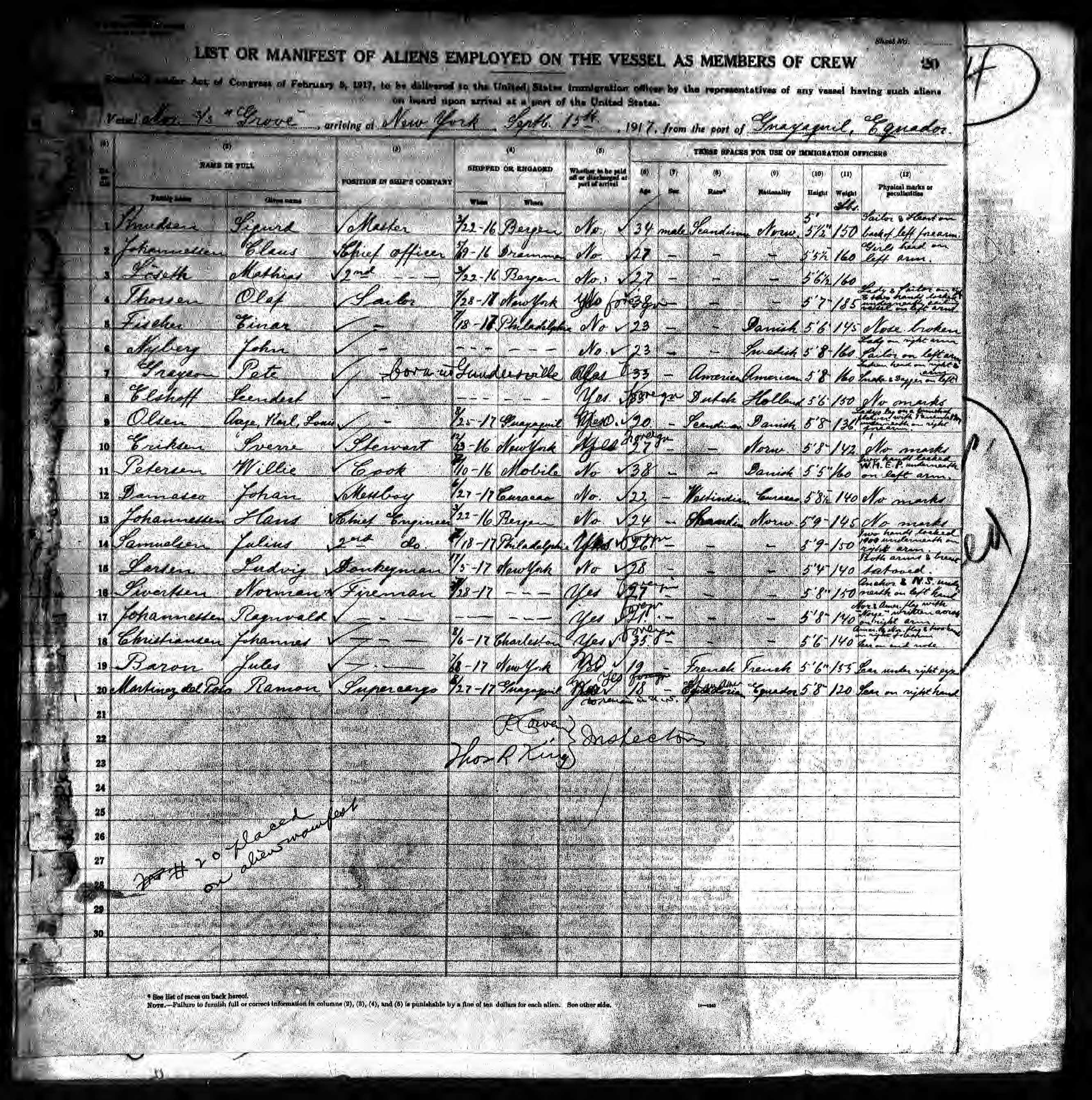
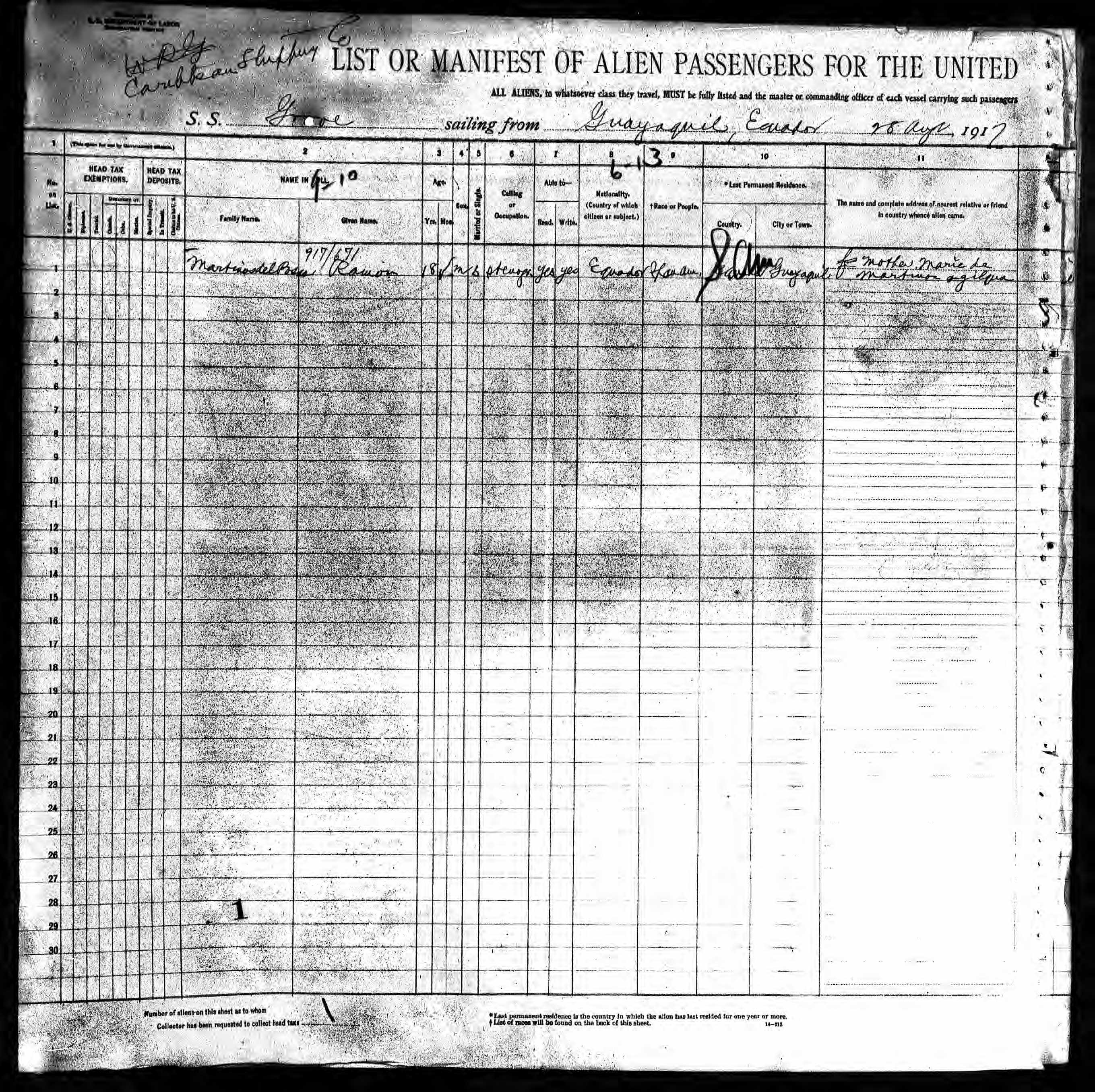
In 1912 Ines gave birth to her first child, a daughter named Agnes in Pacasmayo Peru. That same year Carlos’ resume – which is still available – shows him to be working at a department store in Guayaquil as a manager. Perhaps they had the baby earlier in the year in Peru and then moved to Guayaquil later in the year – we don’t know for sure. But one year later, in 1913, his resume shows him to be employed by “Guayaquil Agencies Company” which is the moniker that WR Grace and Company used for its offices in Guayaquil. In 1913, his nephew Ramon would have been 14 years of age and sometime after that Ramon also became employed by W.R. Grace in Guayaquil. Then on September 16th, 1917, as an 18-year-old young man, he would arrive on a steamship in New York that had departed from Guayaquil1. It was a cargo ship (ie: not a passenger ship) and the ship’s manifest would show that the youthful 18-yr-old Ramon was the “Supercargo” meaning that he was the individual responsible for the cargo (presumably W.R. Grace Cargo). After his arrival Ramon would continue working for W.R. Grace in New York translating pharmaceutical labels from Spanish to English. Meanwhile, in 1916 Ines had given birth to her second daughter, Carlotta, in Ambato Ecuador. By 1918 Carlos had left for Cuba where he would be working for Grace Nitrate Agencies in Havana. His resume shows him to have originally been an accountant there and that he was later promoted to a “sub-manager”. By six years after his arrival (1924) this employer (ie: WR Grace) wanted to transfer him to New York but he was unable to accept this transfer due to the illness of his wife Ines so he resigned and for the next 12 years he would be in business for himself there in Havana with a Cuban partner named “Sune”. The main business seems to have been some kind of fertilizer and they also promoted a motor made in Belgium useful for pumping irrigation water. He traveled to Belgium sometime during this period on business relating to this motor.
Meanwhile back in Guayaquil Ines’ sister, Maria Teresa, had lost her husband very suddenly in 1917. His death meant that in a single day she went from being the wife of a famous man and an able provider to being a widow with an extremely uncertain future. Though her sister Ines left the country for Cuba with her husband Carlos in 1918, it seems, based on documentary evidence, that the two sisters stayed in touch somehow.
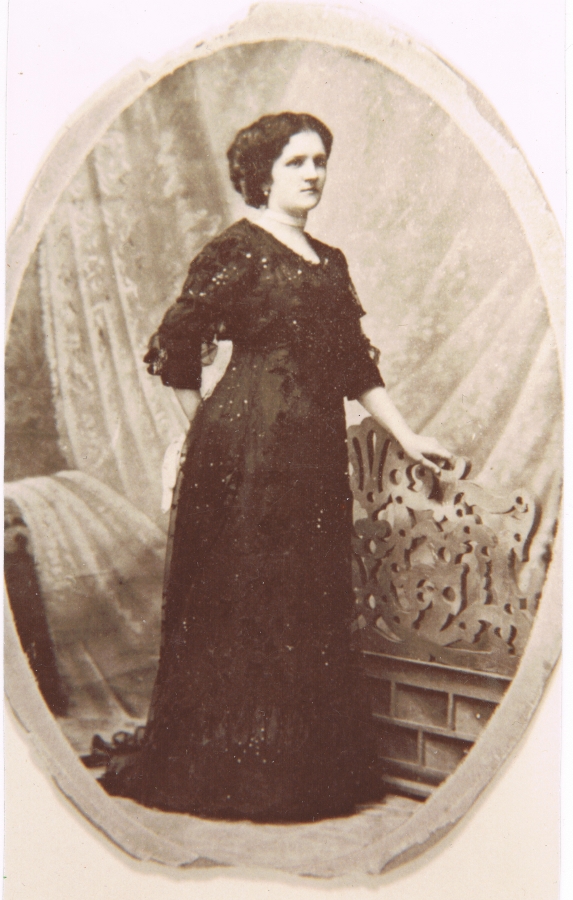
Maria Teresa Del Pozo De Martinez
Very soon after her husband’s death, the newly-widowed Maria Teresa, who was ill herself with cancer of the uterus, would make an extremely fateful decision to leave her native land and travel to New York with her four very under-age children. It would be a long journey but it was one that her late husband had made many times, the last one as recently as four years before his death when he traveled there to check up on one of his sons attending the University of Pennsylvania. Maria Teresa’s relations with the step-children from her husband’s first marriage were, for the most part, not good. But that was probably not the only factor making her feel less secure in her native culture. She was the niece of the bishop of Guayaquil but her late husband had been at the forefront of movements to end abuses by ecclesiastical officials and to terminate their entrenchment and power in Ecuadorian politics. Also, this DelPozo family from which Ines and Maria Teresa had sprung had suffered great misfortune as a result of the father having lost his fortune and according to present-day descendants in Guayaquil they were reputed to have been somewhat impoverished and disoriented as a result. One of the daughters (a younger sister of Maria Teresa) had simply boarded a ship for Peru one day and was never seen or heard from again. By the time of Maria Teresa’s journey to New York, one of her brothers was already in New York; another would journey there ten months later. According to testimony of her daughter Mary Agnes, she knew that she was very ill. We have every reason to believe that her uterine cancer was serious enough that if she stayed there in Ecuador the limited medical infrastructure available to her might mean that the illness would be terminal and that her under-age children might well be orphaned. It seems likely that her husband would have informed her of the superior medical infrastructure available in the US and perhaps she reasoned that her chances of beating this cancer would be better if she could access those resources. At the time of her arrival at the port of New York, a mere two years and four months had elapsed since her husband’s death. A trip like this would have involved extensive preparations. She had been busy and determined. Her sister Ines was coming only to give birth to her baby and after her arrival she would make it abundantly clear to her hosts2 that she had no desire to stay in the U.S., that she wanted to return to Latin America and we have every reason to believe that her younger sister Maria Teresa was of similar mind.
Whatever her reasoning might have been we know that Maria Teresa arrived at Ellis Island, New York on June 24th 1919, that her sister Ines arrived three weeks later and that Ines was met by Ramon at Ellis Island – the immigration document states that she was “discharged to nephew Ramon Martinez Del Pozo” and includes his street address in Manhattan. From all this data it seems that we must conclude that these two sisters were in communication and that their near-simultaneous arrival in New York in 1919 was planned and meant to coincide. Further evidence comes from Carlos’ arrival three years later (1922) at Ellis Island. When the immigration officers asked him on arrival about any friend or relative whom he was planning to join in the US he had stated: “Friend, R. Martinez, 52 Wall Street NYC” (undoubtedly meaning Ramon at his place of employment with WR Grace). No such statement can be made regarding their brothers Teodoro and Alberto. As we rapidly approach – in May 2020 – the 100th anniversary of Maria Teresa’s death, no documentary evidence has come to light about any contact either of these two sisters may have had with their two brothers after their arrival in New York (ie: we can conjecture that they probably met but there is no document to prove that they did meet).
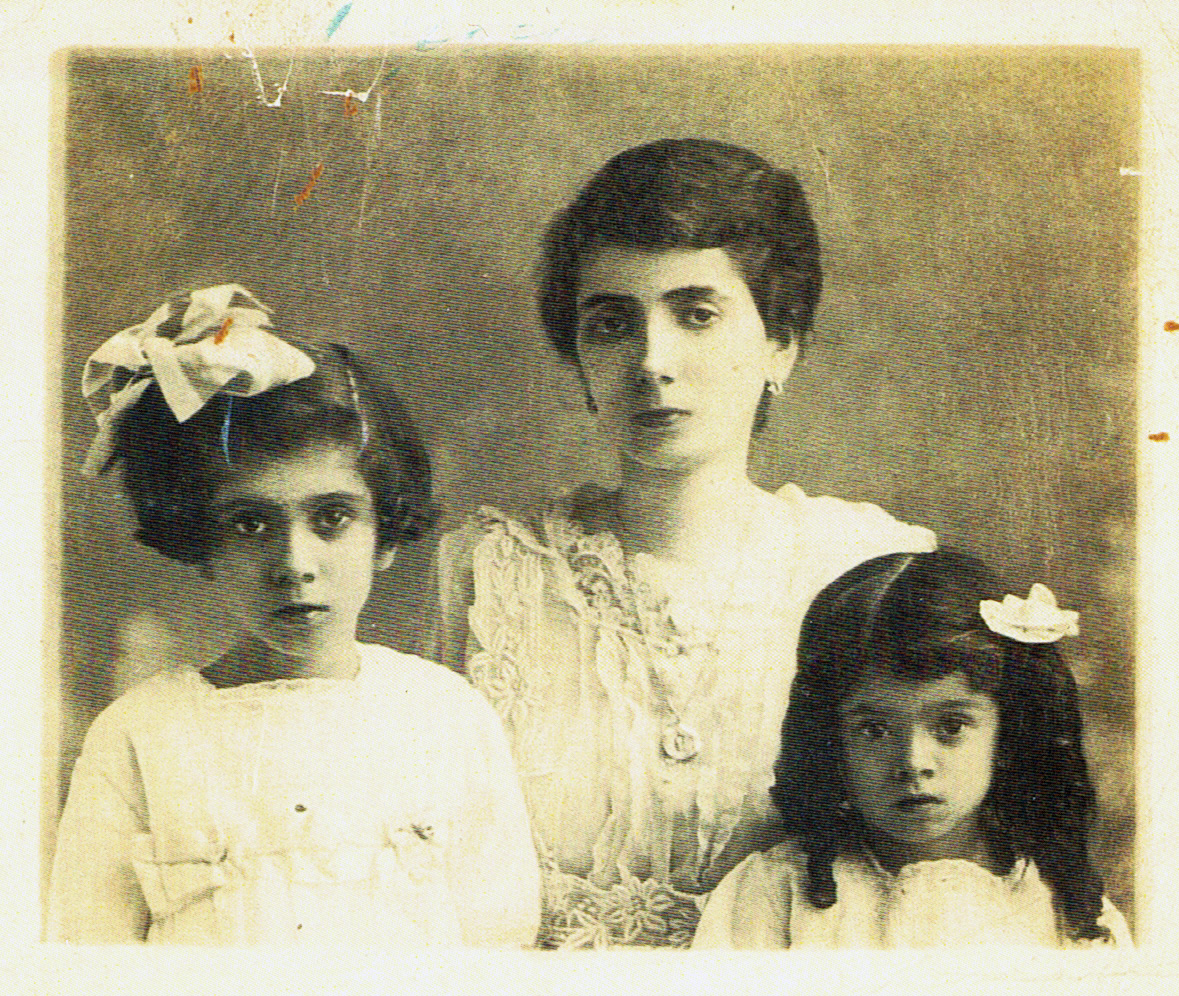
Ines Wilson with her two daughters Agnes and Carlotta. Based on the ages of the girls, it seems likely that this photo would have been taken shortly after she had given birth to her son Charlie.
For Ines, this journey in 1919 was her first entry into the US.
She was five months pregnant with her son Charlie at this time and her two daughters Agnes and Carlotta were with her. The intent was for Charlie to be born in the US and in November 1919, four months after her arrival, Charlie was born. Since Ines had four months to go before giving birth and would not be fit for the long trip back to Ecuador for at least a few months after giving birth, we can reasonably say that Maria Teresa had every reason to believe that her older sister Ines would be there in the New York area for at least six or seven months after their arrival.
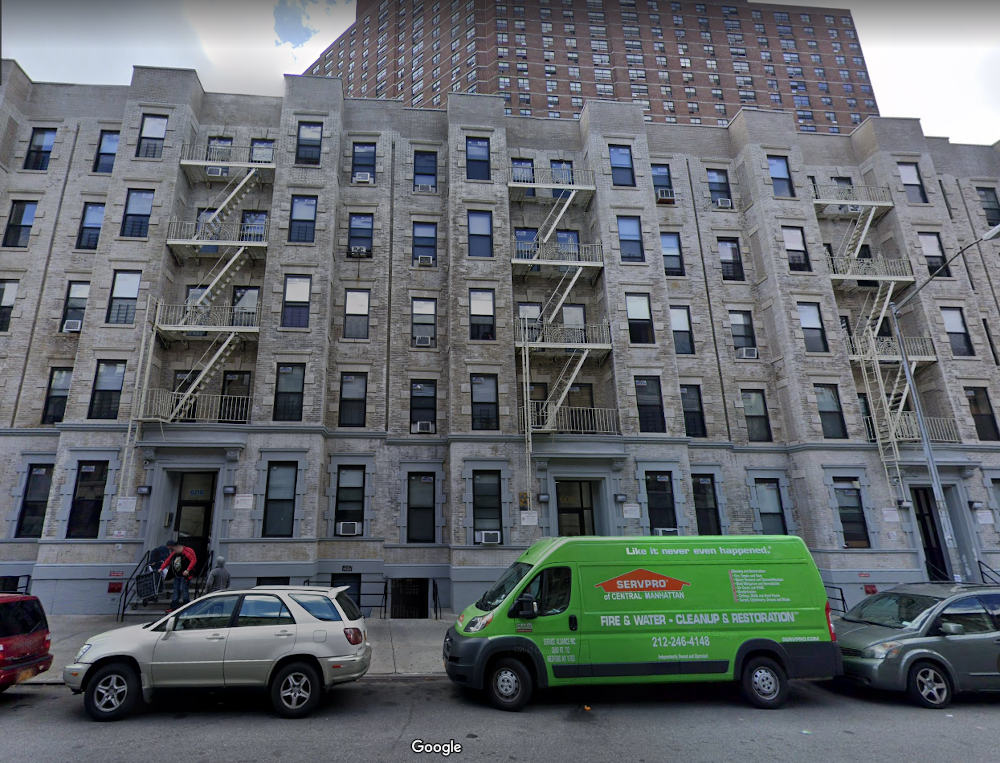
In mid-1919 the 22-year-old younger brother of Ines and Maria Teresa, Alberto, and his 16-year-old wife were living here on the 6th floor of 612 West 135th street in Manhattan (image capture from google maps)
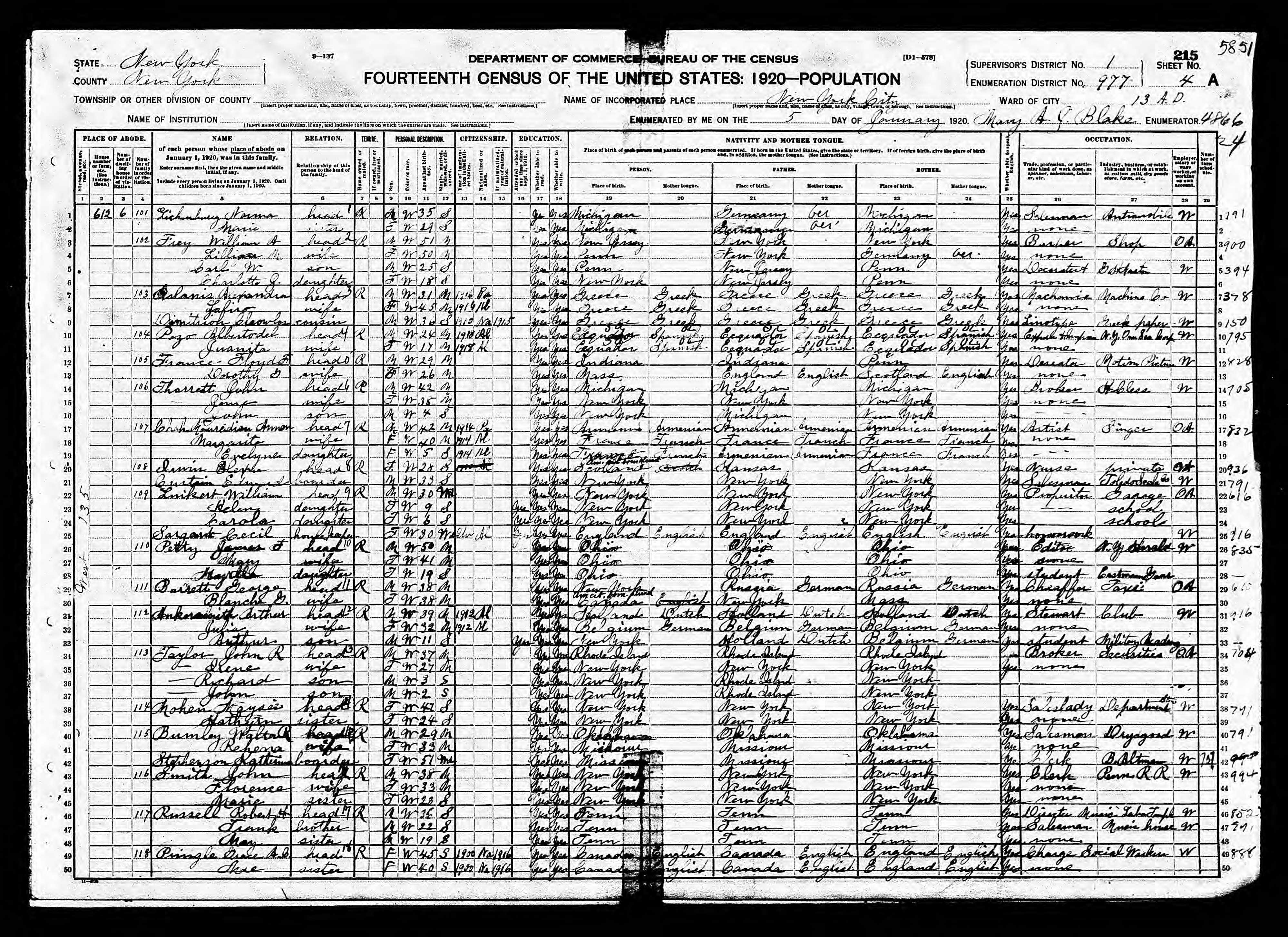
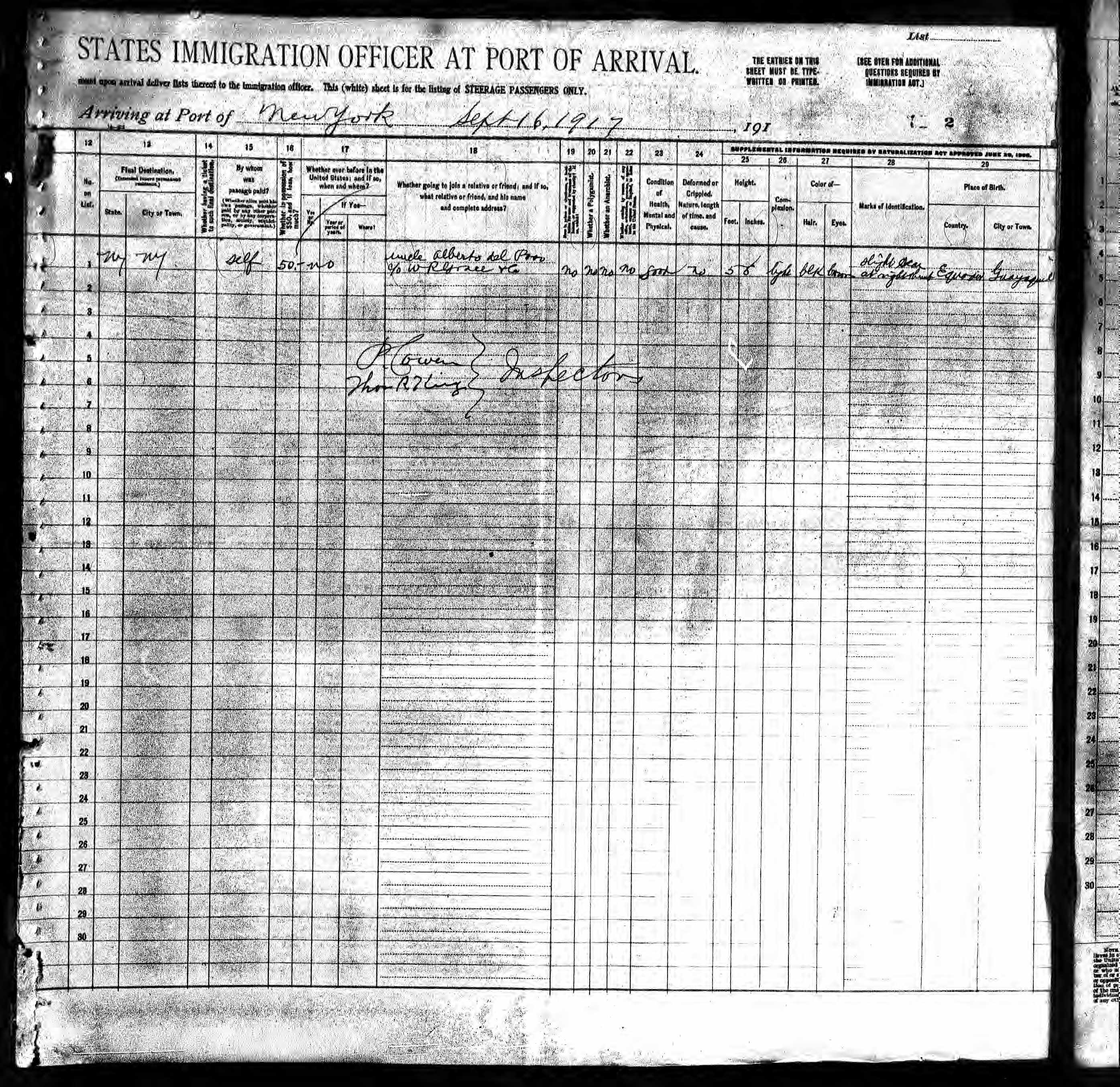
But before either Maria Teresa or Ines Del Pozo had arrived in the US, two other family members had been there for about two years. Documentation shows that Maria Teresa’s oldest son Ramon had arrived on a steamship on September 16, 1917. The Ship’s manifest shows that he was the “Supercargo”, meaning that he was the individual responsible for the cargo (presumably W.R. Grace cargo). When the immigration official asked him if he was going to join a relative or friend in New York, he said that he was going to join “Uncle Alberto del Pozo c/o W.R. Grace and Co.”. This mention of Maria Teresa’s brother Alberto is the first documentation we currently have of his presence in the New York area. It also seems to be indicating that he must have also been employed by W.R. Grace at this time but this is the only documentary evidence linking him to any employer. He was only 21 yrs of age in 1917 and shortly thereafter a U.S. census document shows him to be married to an Ecuadorian girl named Juana who was about 7 years younger than he was. Ramon was only 18years of age. Three months after Ines and Maria Teresa’s mid-1919 arrival in New York, Alberto’s very young wife would conceive and nine months later, on May 27, 1920 she would give birth to their first baby – a boy who was named Alberto after his father; and a US Citizen..
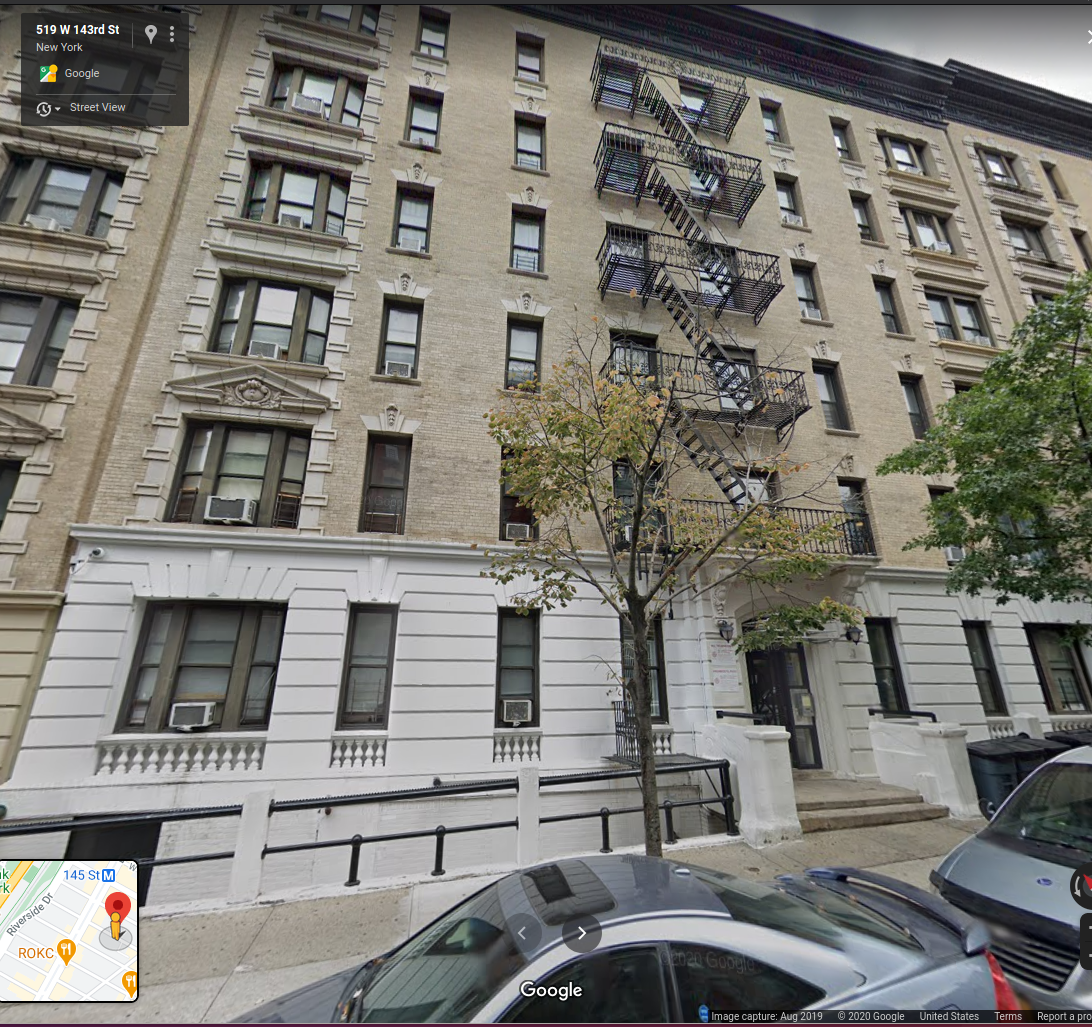
When his mother arrived in the summer of 1919, Ramon was living at 519 W. 143rd Street in Manhattan. This is the address he gave to the Ellis Island Offical when he went to meet his aunt Ines (Wilson) there three weeks after his mother’s arrival. This address is different from the one showing on Maria Teresa’s Death Certificate a year later (510 W. 172nd Street). (photo: googlemaps)
So putting it all together we now have a picture of three or four Del Pozo Siblings being in the New York area in the 1919 timeframe: two of them giving birth to babies who would be American Citizens – and a third with a life-threatening illness, arriving with four under-age children in tow after having synchronized her arrival with her older sister who still had a living husband who was a good provider …probably hoping that the superior medical infrastructure in North America might save her from near certain death and her children from the near-certain danger of becoming orphans had they remained in Guayaquil. The fourth, Teodoro, who definitely arrived in New York by 1920 was by all accounts definitely something of a drifter.
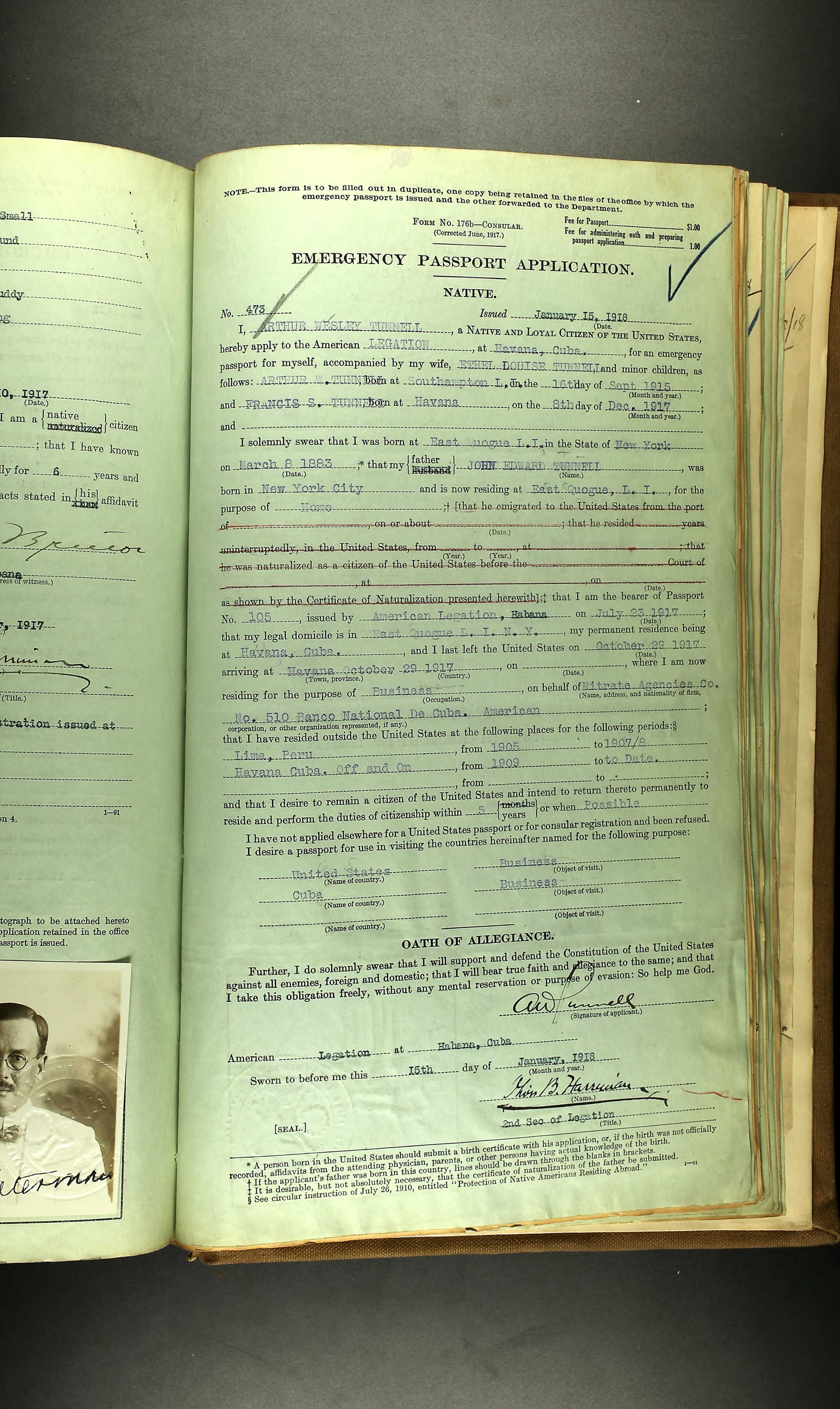
One of these siblings, Ines, had prior connections in the New York area. Her husband Carlos Wilson had a friend and Business Associate in Havana by the name of Arthur Tunnell who was also employed there by WR Grace. Arthur had formerly worked for Grace for almost three years in Lima Peru from 1905-1908 before transferring to Cuba. Arthur was from East Quogue Long Island. In those days there were “boarding houses” that were remotely similar to a “bed and breakfast” of today. Arthur’s family, the Tunnells, owned a boarding house in East Quogue called “The Pine Grove House” and his family was friends with another nearby family, the Caffrey family, who also maintained a boarding house in East Quogue called “the Caffrey house”.
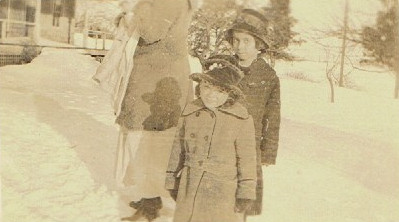
1920 Baby Nurse holding Carlos Wilson II, Carlotta, Agnes, on lawn of Caffrey House Overlooking Tiana Bay.
When the staff at Ellis Island asked Ines whether she was going to join a relative or friend she told them that she was going to join a “Friend Miss Caffrey, East Quogue Long Island” …and indeed she stayed at the Caffrey house. Like many South Americans she spoke little English. Decades later, a lady from the Caffrey family would recount to Patty Wilson how she had tried to teach English to Ines but that Ines just didn’t seem to be comfortable in North American culture and struggled with the language. Arthur Tunnell had a niece, a little girl who had been born in 1912 -the same year as Carlos’ oldest daughter Agnes. Years later, as an adult, she would tell Carlos’ granddaughter Patty Wilson that she distinctly remembers meeting Carlos when she was just a four-year-old little girl. This would mean that she first met Carlos in 1916 either in East Quogue or in Cuba …it’s not known where – and it also necessarily would imply that Carlos’ friendship with Arthur goes back at least to 1916. But she proceeded to tell Patty that at that time when she was a four-year-old little girl she had decided that she wanted to marry Carlos Wilson when she grew up. More about her later.
Some time after the birth of Charlie, Ines returned to Havana with her newborn infant and her two little daughters. Presumably this might have been in early 1920 – perhaps January or February or March – the time is not known. Shortly thereafter the condition of her sister back in New York was deteriorating. We know nothing about what might have been happening to her in April, May or June but we do know that she was admitted to the hospital in New York on July 6th 1920 and by twelve days later, July 18th, she was pronounced dead with the cause of death being listed as “carcinoma of Uterus”. Her four young children were now left orphans in a strange land whose language they did not speak and far, far away from the stronghold of the family of their mother and father. By now their older brother Ramon would have been twenty years of age3 and he was presumably their guardian at this point but an information blackout was maintained with respect to their fate for approximately the next decade – a very critical point in their lives. In later life as adults they would say almost nothing about this period in their lives; when the subject came up they would say that they had been placed in a “boarding school”. At one point late in life, the youngest, Boni, would refer to it in passing as “that orphanage” but details about the true nature of this institution or about the duration of their stay there were never disclosed and at this point we would have to maintain that they all took it with them to their graves.
Ramon had been born in 1899. He had an older half-sister named Maria Martinez. Their father’s first wife Rafaela had died giving birth to Maria in 1892 and he married his second wife Maria Teresa four years later in 1896. So from the age of 4yrs, Maria Teresa was the only mother that Maria Martinez had ever known in her life. She maintained good memories of her step-mother and, of course, she had grown up with her half-brother Ramon who was seven years younger than she. After Maria Teresa’s death in New York Maria Martinez would be Ramon’s primary contact with the large family that they had left behind in Ecuador.
Meanwhile back in Cuba, Ines would have had her hands full far from her own immediate family with her newborn son and two very young little daughters. We know that Carlos Wilson journeyed to New York in 1922, two years after Maria Teresa’s death and that he told the staff at Ellis Island that he would be visiting “Friend, R. Martinez, 52 Wall Street NYC” but nothing more is known about that visit. It would certainly seem to support the assumption that Ines’ ties with the family of Maria Teresa were strong before and after her death. Then two years later in 1924 we know from his resume that Ines was already ill because it says that Carlos resigned from his position with WR Grace in Havana due to his wife’s illness and that sometime thereafter he went into business with a man, a Cuban, selling fertilizer and engines for agricultural irrigation – remaining in this business for a 12 year period from 1924-1936. In 1924 Carlos and Ines’ oldest daughter Agnes would have been 12 years old. We know that at some point Ines became ill with tuberculosis in Cuba and that she was advised to go back to Ecuador because of this illness. So she left Cuba for Riobamba Ecuador, taking her young son Charlie with her and remaining there until her untimely death just a few years later in 1928.
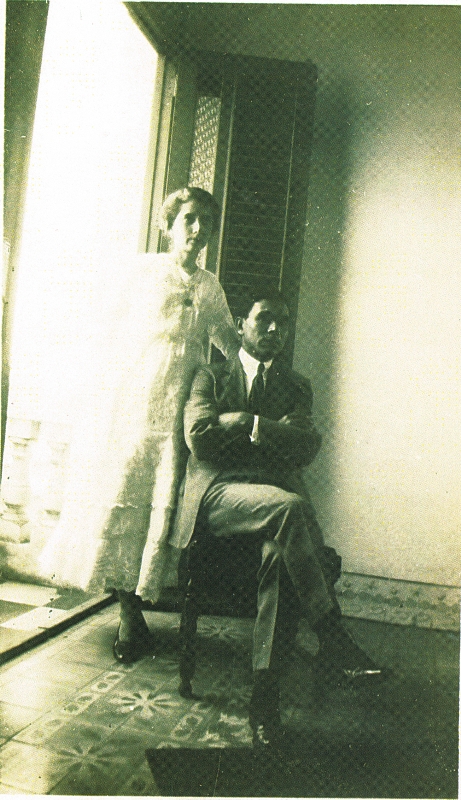
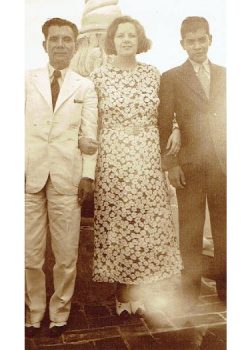
Ines and Carlos
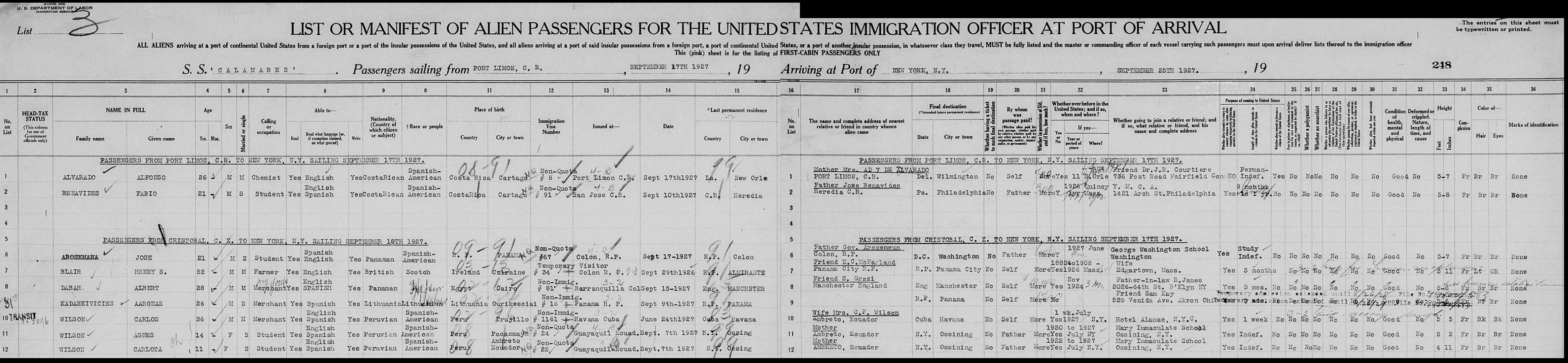
We also know that daughters Agnes and Carlotta were sent to boarding schools in New York at a very early age – definitely before 1927 when they were 14 and 11yrs respectively. Shortly before her death Ines took Charlie to Quito where they stayed in a hotel and years later he would recall that he was very sad because he knew that his mother was going to die. She gave a party there for him on the feast day of St. Charles, November 4, 1928. Shortly thereafter her condition worsened and she died (Nov. 24th or 28th, 1928). It was tuberculosis – often terminal in those times. Her remains were originally interred in Riobamba Ecuador but her sister Maria Ester later had them exhumed and re-interred in Guayaquil.
Later, in May 1929, Charlie’s uncle Jose Pastor Del Pozo took him to Panama where his father Carlos was waiting for him to take him back to Cuba. Charlie recounted that this same Uncle Pastor had cared for him in Ecuador when his mother was sick, before her death and that his aunt Maria Ester (aka “ñaña Te”) also took care of him. Pastor and Maria Ester were brother and sister respectively of Ines. Maria Ester was an unmarried school teacher and her memory is very alive today among Del Pozo relatives in Ecuador who knew her but Jose Pastor was married and has descendants both in North and South America.
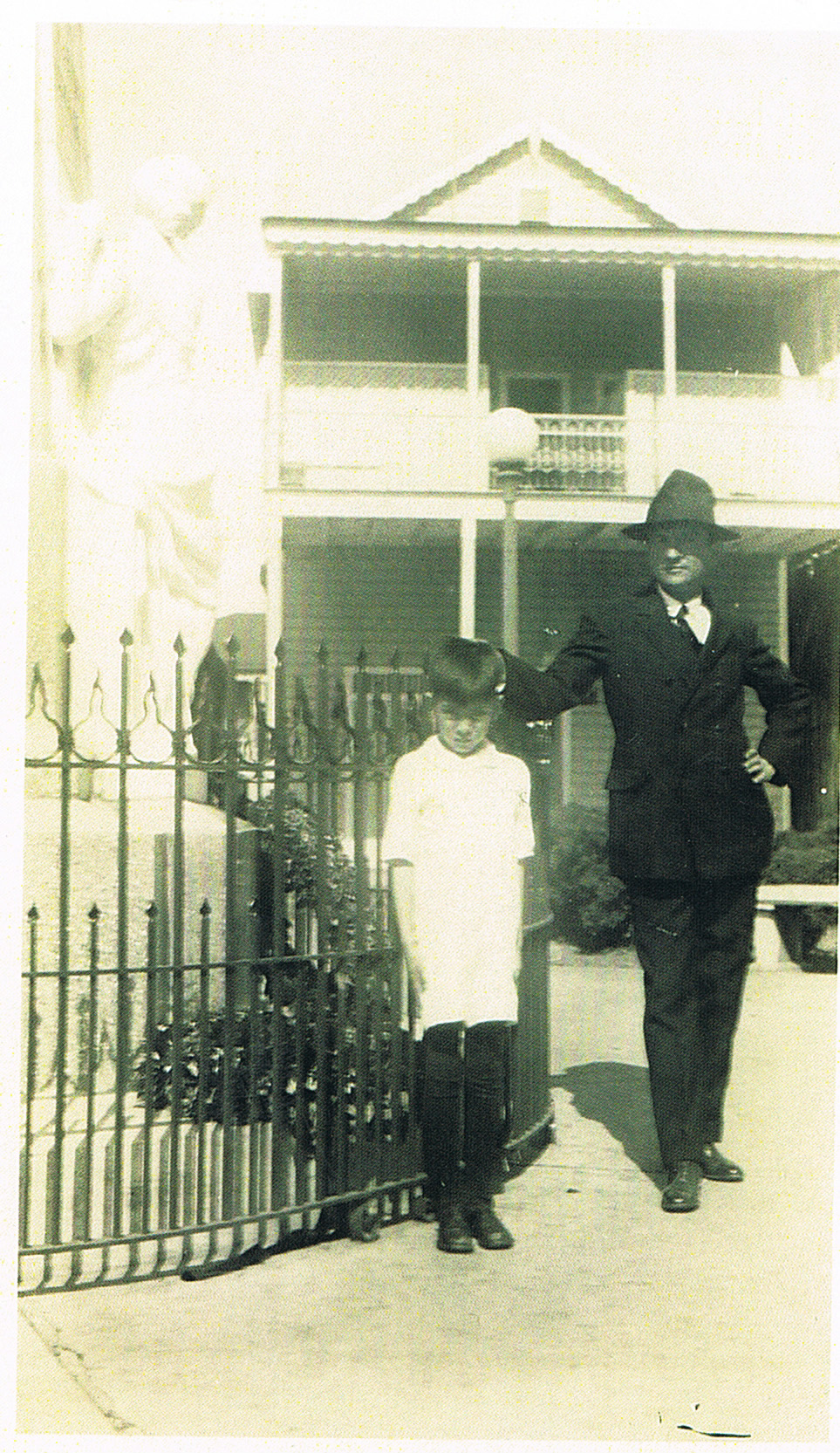
Charlie and his Uncle Pastor in Panama
Sometime in the late 20th century it would come to light that a Peruvian young girl named Leonor Canote Astudillo had travelled to Guayaquil in 1909 where she had met the young 17-year-old Carlos Wilson and that she subsequently returned to the small coastal town of Paita Peru where she gave birth to a young boy whom she named Juan. In the US and in Peru there are still descendants of Juan Wilson who trace their ancestry back to Carlos Wilson. Carlos Wilson’s family in Peru was aware of Juan and his descendants. Over time they maintained contact with this branch of the family and from time to time they would inform them of events in the life of their kinsman and his family through Ines up north.
In 1932, three years after the young boy Charlie left Ecuador to join his father in Cuba, Arthur Tunnell’s niece back in New York was by now a young lady who had grown up spending lots of time with Carlos’ oldest daughter Agnes and the two of them were fast friends. Her name was Ethel Tunnell. She was now twenty years old and by now Carlos had been a widower for four years.
The year 1933 saw great upheavals in Cuba. This was the year of the “Sargent’s Revolt” also known as “the Cuban Revolution of 1933”. It was a coup led by Fulgencio Battista who would later bring so much corruption to Cuba ultimately precipitating the overthrow by Fidel Castro twenty six years later. Cuba was entering a period of increased instability. By about two years later, in about 1935, Carlos’ business venture in Cuba was starting to unravel because his Cuban business partner was, according to the testimony of Charlie, embezzling money from him. The matter ultimately became a court case but the Cuban court sided with the corrupt partner and Carlos lost.
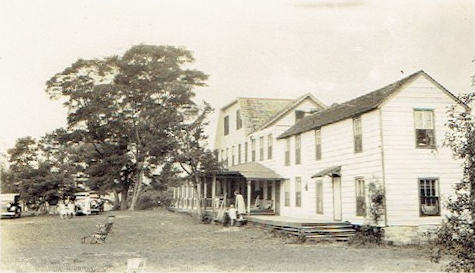
Pine Grove House, East Quogue, Long Island
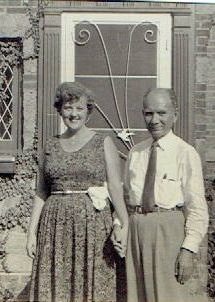
But 1933 saw another important event – not in Cuba but on Long Island. On August 6, 1933 at a ceremony at Hampton Bays Methodist Church, Ethel Tunnell became the second wife of Carlos Wilson. The bride was 21 years of age and the groom 51. The ceremony was followed by a gathering at the Tunnell’s “Pine Grove house”. Carlos’ first daughter Agnes seems to have had no problem with the idea of her friend becoming her father’s new wife; in later years Carlos and Ethel would be living in Florida and Agnes and her family would make the long journey by car from Long Island to visit her father and his wife who had been her close friend as a young lady. Presumably, Ethel would have returned to Cuba with her new husband after the wedding. The sargent’s revolt in Cuba took place in September, the month following their wedding. It is not known whether their return to Cuba occurred before or after this event.
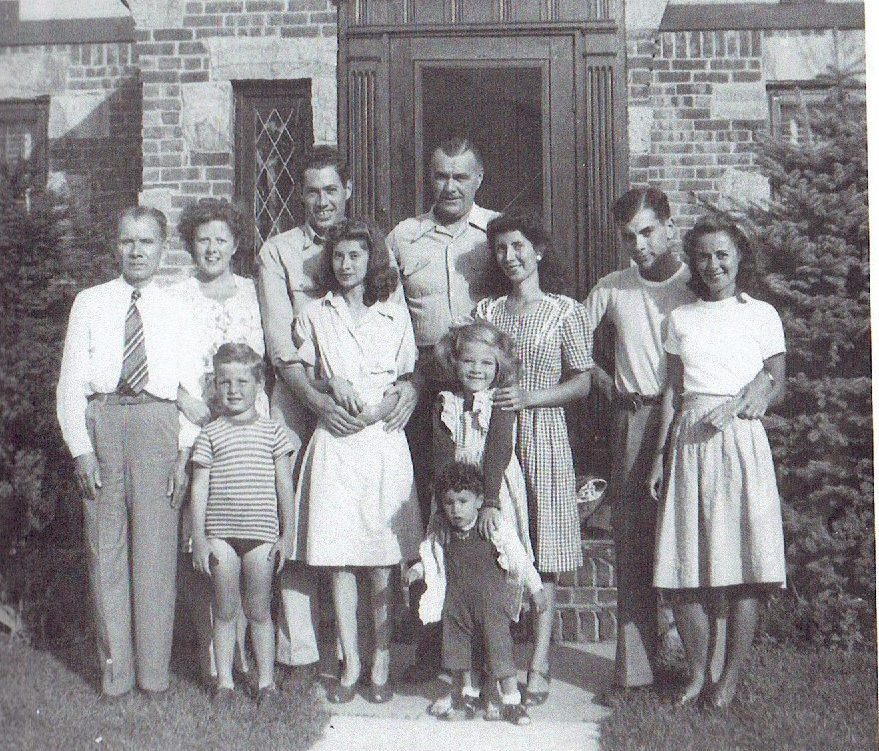
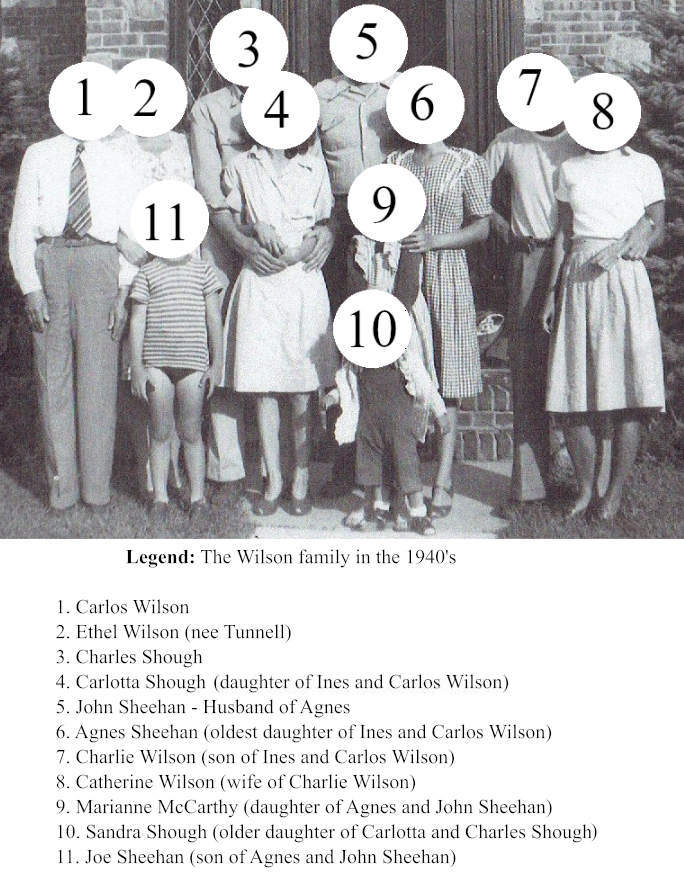
Carlos and Ethel (left) with Carlos’ son and daughters and their spouses and children – taken some time in the late 1940’s
Click the photo to enlarge it
(or click Legend to see who’s who)
But Carlos and Ethel’s stay in Cuba came to an end in 1936 and there is a record of them coming in through Ellis Island with Charlie in that year. Carlos was the only non-citizen at the time. They would go to live in Tampa where Carlos would be employed by US Phosphoric Products. Granddaughter Mary Ann has great memories of the family driving down from Long Island all the way to Tampa to visit them summer after summer.
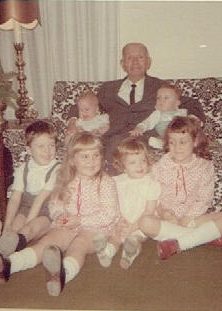
After Carlos’ passing in the 70’s Ethel would often come up to the New York area to visit the family. Ethel passed away in 2003. She lived to the age of 90. The family has fond memories of her.
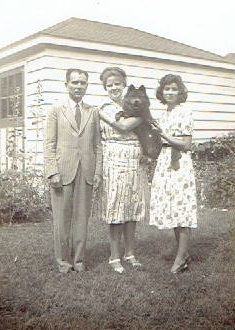 Carlos, Ethel, Carlotta, Chow Dog Suzie (St. Albans, 1940)
| Source | Document Link |
|---|---|
| Ellis Island | 1919 Maria Teresa Arrival with her 4 very young children |
| Ellis Island | 1919 Ines Wilson Arrival with 2 daughters |
| Ellis Island | 1921 Alberto Arrival with wife and child |
| Ellis Island | 1927 Carlos Arrival with 2 daughters |
| US Govt | Arthur Tunnell US Passport Application in Cuba |
| Cuba Govt | Carlos Wilson Partnership Title – Cuba |
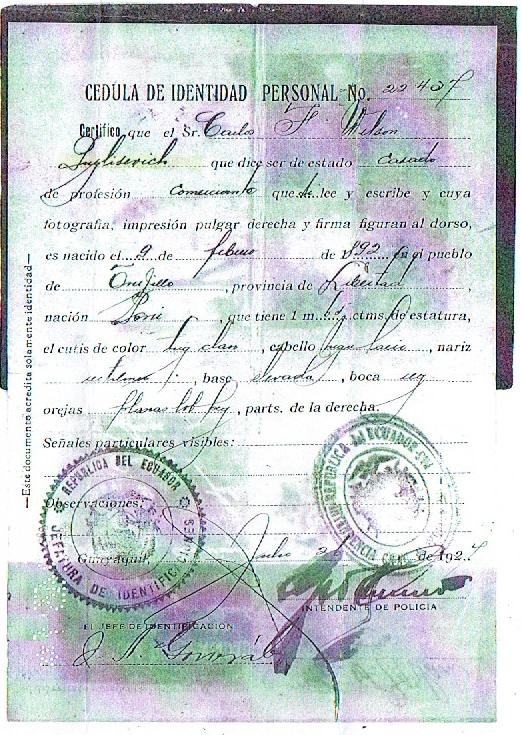
| Cuba Govt | Carlos Wilson Personal Identity Card – Cuba |
| US Govt | Alberto & first wife Juana 1920 Census NYC |
| US Govt | Teodoro Arrival Key West April 1920 |
| Carlos Wilson | Carlos Wilson’s Resume (Ethel gave this resume to Patty Wilson) |
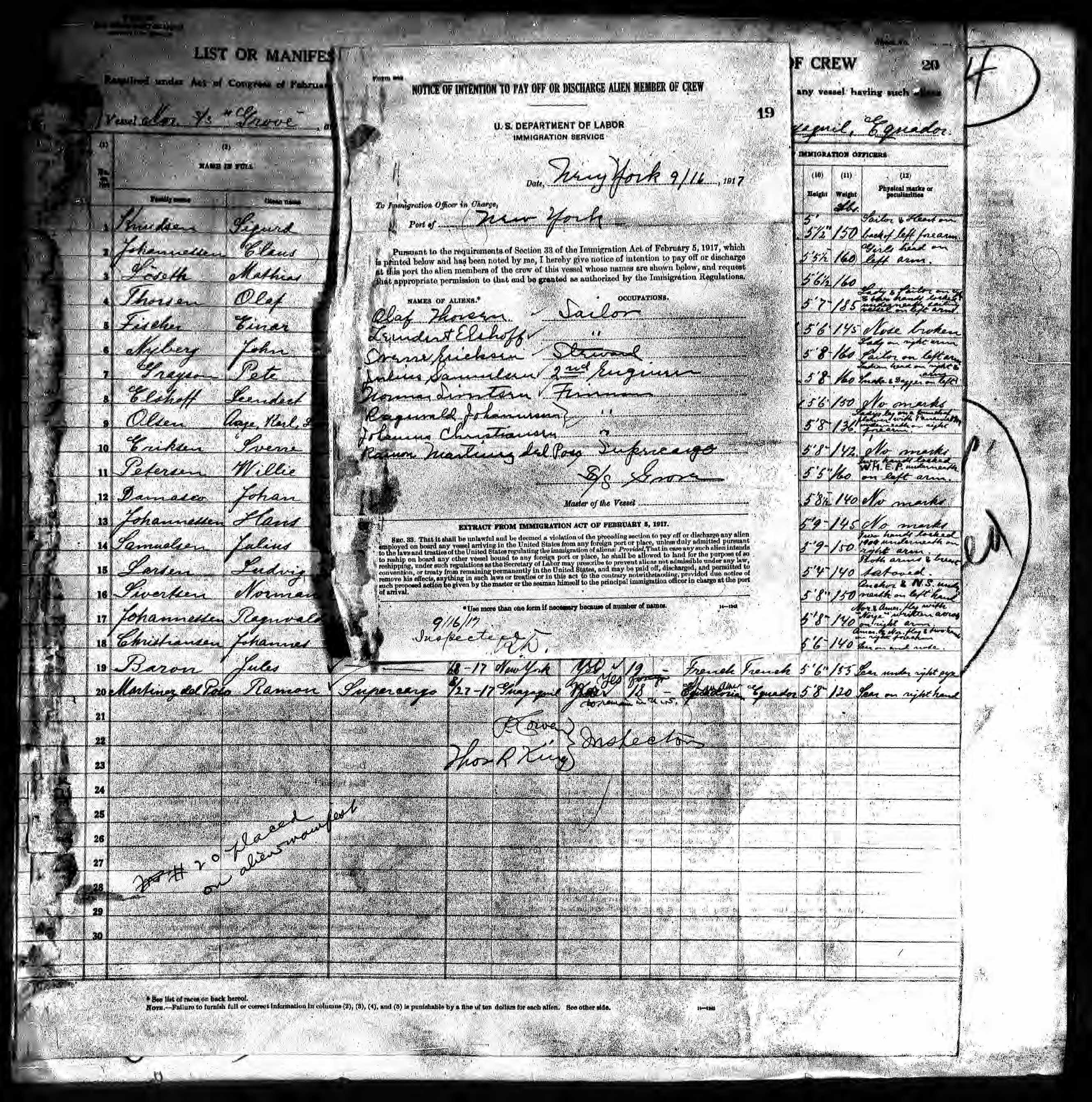
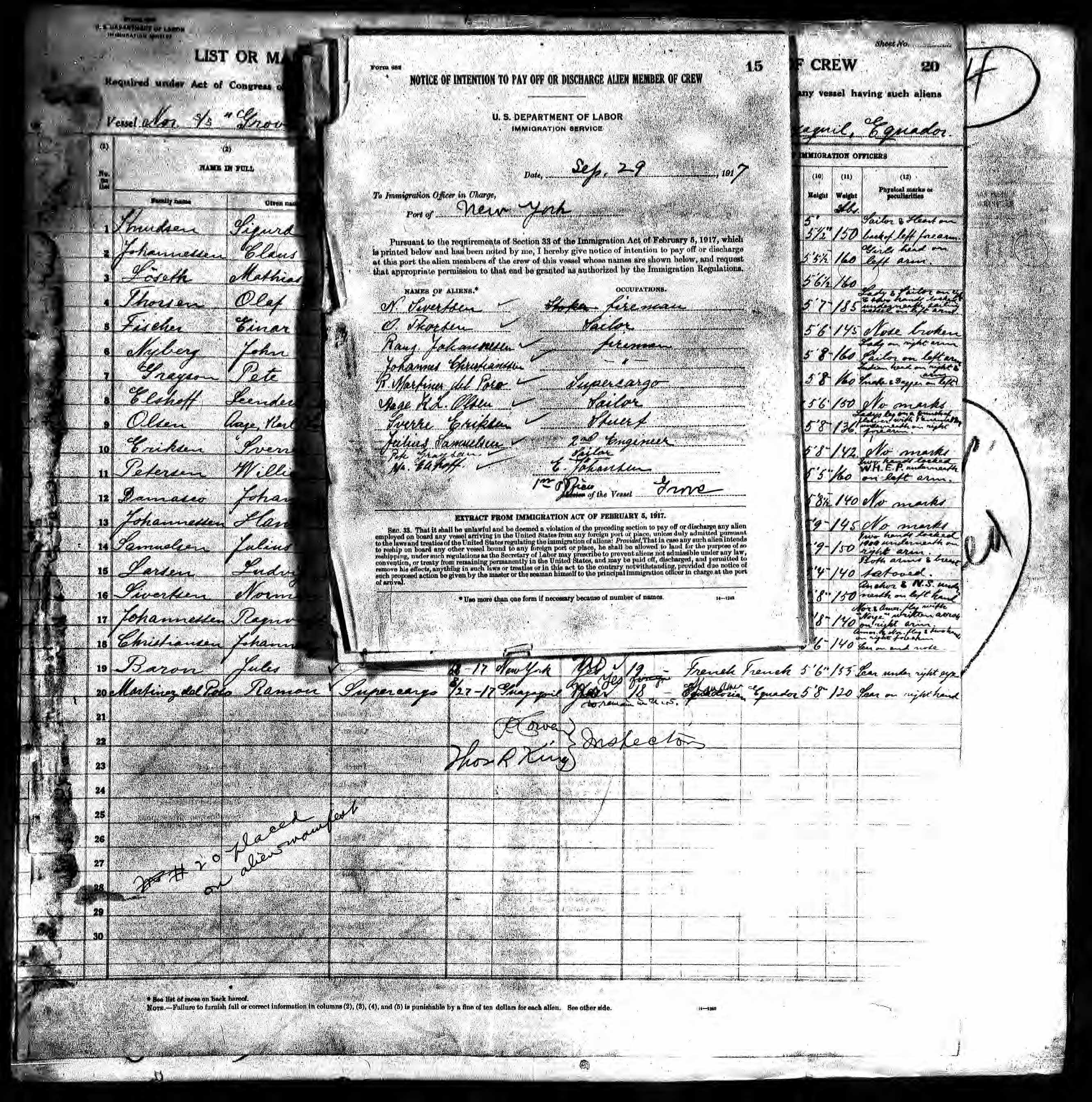
| US Govt | 1917 (Sept. 16) Ramon’s arrival by ship mentioning WR Grace and Alberto In five pages:Doc_1, Doc_2, Doc_3, Doc_4, Doc_5 |




- This would mean that the steamship would have passed through the newly-built Panama Canal ↵
- This is on testimony of Patty Wilson who heard it from Ethel Tunnell who heard it first hand and from her own family …it was no secret. ↵
- Ramon was single at the time of the mother’s death. He would marry five years later in 1925. The marriage did not last. ↵